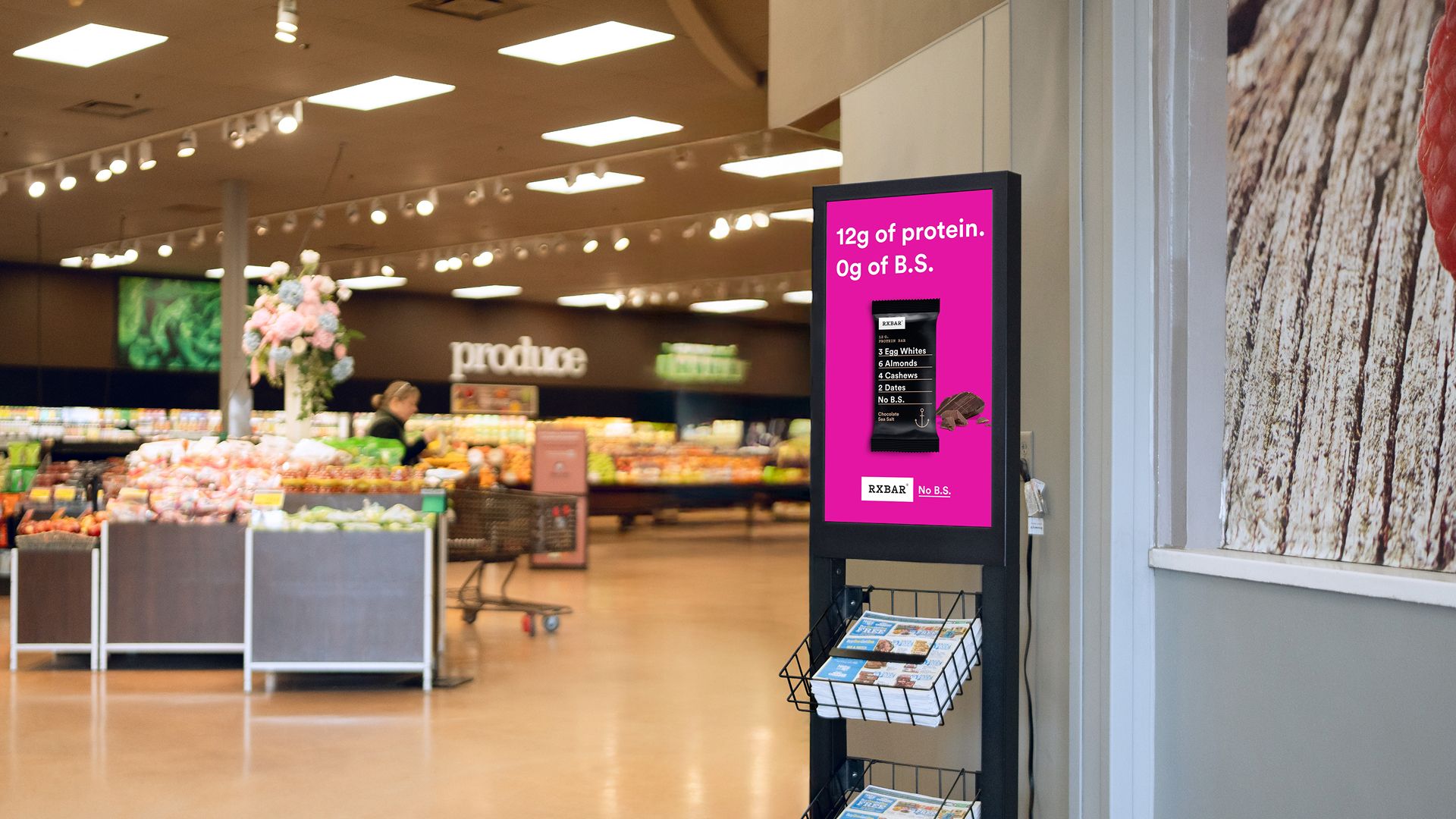

Regional grocery environments are becoming a more important part of the retail media conversation. For years, most retail media attention has centered on national retailers and massive scale. Bigger networks, broader reach, and larger datasets often dominate the conversation, but brands are increasingly looking for something more nuanced than reach alone.
What we’re seeing is that context matters more than ever. In-store retail media is evolving beyond questions like “How many stores?” or “How many screens?” Advertisers are looking more closely at shopper behavior, store loyalty, and the trust people place in the environments where they buy.
The store itself matters, not just as a place to transact, but as a setting shaped by habits, routines, and community. That’s part of what makes regional grocers increasingly valuable.
Why regional grocery environments matter
Grocery shopping is deeply habitual. Many shoppers visit the same stores weekly — sometimes multiple times per week — making those stores familiar environments tied to routine and trust.
Regional grocers, in particular, often reflect the preferences and identities of the communities they serve in ways that feel distinct from big national chains. Merchandising, product selection, store layout, and shopper behavior can vary meaningfully from one region to another.
This variation creates opportunities for brands to show up in environments that feel contextually relevant rather than generalized. For advertisers looking to capture authentic attention, regional can mean strategically valuable, not small.
Brands care about impressions, of course, but they also care about timing, mindset, and proximity to purchase. In-store retail media gives advertisers a way to reach shoppers while they’re actively making decisions in the environments they already trust.
What the Raley’s rollout signals about the future of retail media
The recent launch of The Raley’s Companies’ in-store retail media network with Grocery TV highlights how these trends are playing out. The rollout spans 208 stores across California, Nevada, and Arizona, including banners such as Raley’s, Bel Air, Nob Hill, Bashas’, Food City, and AJ’s Fine Foods. Many of these banners have deep regional roots, including stores curated for Latino and Native communities.
Part of what makes regional expansion increasingly viable is how quickly retailers can now stand up in-store retail media capabilities. Raley’s Vice President of Digital Commerce, Zac Wilson, noted that what may once have taken years to build was launched in a matter of weeks.
The speed of the rollout points to a more mature in-store retail media infrastructure. As retailers increasingly treat in-store media as a strategic capability rather than an experimental add-on, regional expansion becomes more feasible than it once was.
The next phase of retail media growth
For advertisers, regional relevance and aggregated scale no longer have to be tradeoffs. The biggest growth opportunities may not lie solely with the largest national chains. Regional retailers are emerging as key players in the media landscape because they offer something many brands are actively looking for: trusted environments, loyal shoppers, and high-intent moments close to purchase.
National reach still matters, but advertisers may increasingly prioritize context alongside scale. The future of in-store retail media may depend as much on connected regional networks as on one-size-fits-all national reach.
Explore the In-Store Retail Media Playbook for practical guidance on planning, measuring, and scaling in-store campaigns.