If you think shoppers have already made up their minds before they enter the grocery store, the latest research suggests otherwise.
Our 2026 In-Store Perception Report found that 95% of shoppers make at least half of their purchase decisions while they're in the store, and nearly two-thirds have made a purchase after seeing an in-store ad. The findings challenge one of retail media's most persistent beliefs: that in-store advertising reaches shoppers too late to influence behavior.
We asked Marlow Nickell, CEO and co-founder of Grocery TV, and Andrew Lipsman, independent retail media analyst, to share their perspectives on the findings, the misconceptions they believe still surround in-store media, and what brands should take away from the research.
Does in-store advertising actually influence purchase decisions?
According to Nickell, the latest data leaves little room for doubt.
"Shopper receptivity increased across every major store zone compared to our 2023 study," says Nickell. "Digital display formats saw an average 10-point increase in positive customer experience ratings, climbing from 41% to 51%. That momentum is reflected in behavior as well, with 62% of shoppers saying they've purchased something after seeing an in-store ad."
Nickell says the findings put one of retail media's biggest myths to rest. "Brands that think in-store is only a last-mile reminder are undervaluing the channel. Shoppers are already in a buying mindset, surrounded by the products being advertised. In-store also delivers an average of 49% incremental reach on top of existing media plans."
Are younger shoppers really engaging with in-store media?
Generational differences are much smaller than many marketers assume.
"Only an eight-point gap separates the most and least receptive age groups," says Nickell. "There's also a persistent narrative that Gen Z is a digital-only generation, but 55% shop in-store at least once a week, and more than half have purchased something after seeing an in-store ad."
What this tells us is that brands that dismiss physical retail as a way to reach younger shoppers may be overlooking one of their strongest opportunities.
But who brands reach is only part of the story. How in-store media is designed matters just as much.
Why do some in-store ad formats perform better than others?
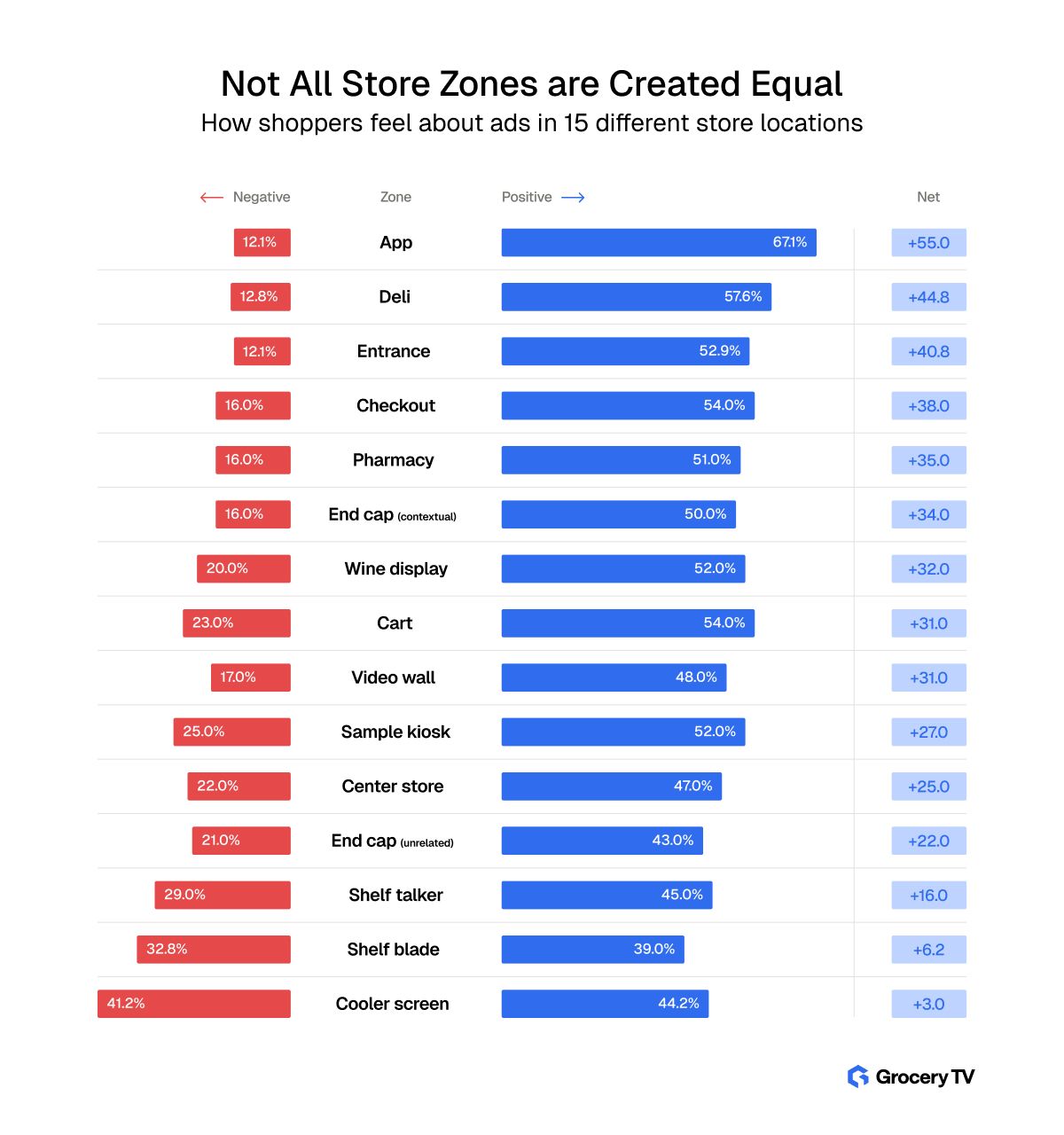
The research suggests shoppers respond best to advertising that complements the shopping experience rather than interrupts it.
"They all share the same problem: they come between the shopper and the product," Nickell says of lower-rated formats like digital cooler displays, shelf blades, and shelf talkers. "In the aisle, shoppers are task-oriented, and anything that slows them down or blocks their view creates friction."
Lipsman points to the industry's experience with the Cooler Screens platform as an example. "The biggest customer experience issues occurred when digital displays conflicted with merchandising or prevented shoppers from easily seeing products. The lesson is simple: don't let media come between shoppers and what they're trying to buy."
Do shoppers want personalized ads in-store?
Not in the same way they expect personalization online.
"Personalization assumes an individual experience, and the store is a shared one," says Nickell. "What shoppers responded positively to was relevance to the environment, things like promotions and contextual content that make sense given where they are in the store."
Lipsman adds, "People are comfortable with personalized ads on personal devices because those experiences remain private. Public displays are different. Contextual relevance is often a better form of targeting because it respects shoppers' privacy while remaining highly effective."
What should marketers take away from this research?
For both experts, the message is clear: shopper expectations around in-store media are evolving.
"Retailers that have been hesitant to invest in in-store networks can feel much more confident," says Lipsman. "The research shows shoppers are receptive, especially when brands focus on formats that enhance rather than disrupt the shopping experience."
Nickell sees the findings as a turning point. As he puts it, "The question shifts from whether it belongs in the mix to how much of the mix it deserves."
Download the 2026 In-Store Perception Report to explore the complete findings and see what they mean for your retail media strategy.