
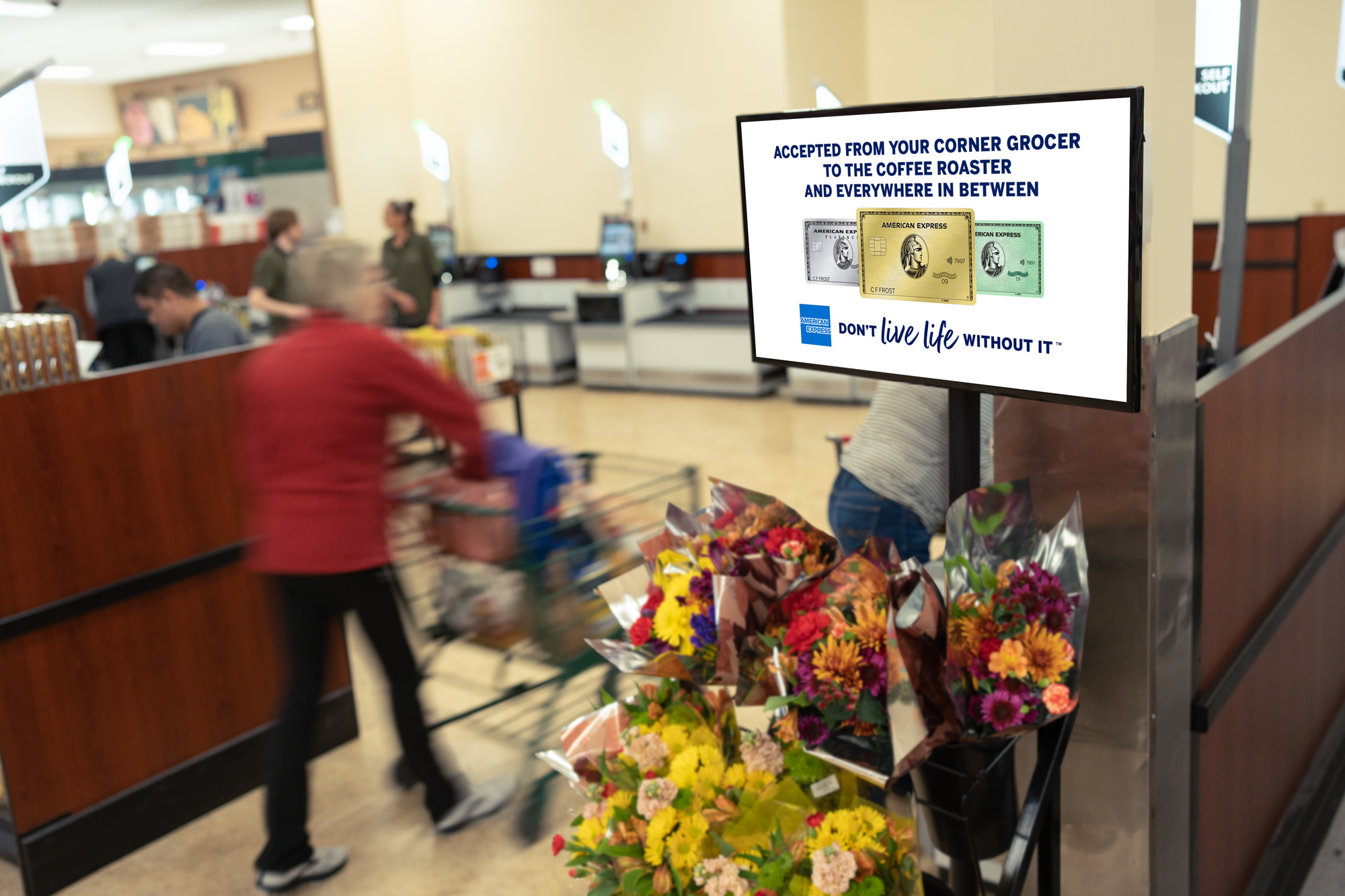
Financial services brands have spent decades optimizing for the right moment: the mortgage search, the credit card comparison, the tax deadline. The assumption is that these decisions happen at a desk, on a phone, or in front of a laptop.
But most people making those decisions also shop for groceries every week. And the grocery store, it turns out, is a more financially active environment than most finserv marketers have accounted for.
In Q1 2026, Grocery TV surveyed 600 verified grocery shoppers about their credit card ownership, banking behavior, mortgage status, tax filing, and overall financial confidence. The findings complicate a few assumptions worth revisiting.
The credit card market is less saturated than it seems
On the surface, the numbers suggest a crowded category. More than four in five respondents carry at least one credit card, and more than a third carry three or more. Legacy bank brands such as Chase, Capital One, Bank of America, Amex, and Discover still hold a firm grip on most wallets. Among cardholders, 83% carry at least one card from a traditional institution.
However, the cards shoppers own don't tell the whole story.
When we asked shoppers what would drive their next card choice, the priorities shifted meaningfully from what drove their current one. Low or no annual fee jumped 15 points to become the top priority at 54%. Sign-up bonuses nearly doubled, increasing from 13% for their current card to 27% for a future one. Fraud protection grew from 20% to 31%.
These movements suggest a shopper who is more deliberate and more incentive-driven at the point of acquisition than their existing portfolio would indicate. The cards they have aren't necessarily the cards they want next.
Confidence doesn't mean satisfaction
Two findings from the study stand out: 73% of shoppers feel confident managing their finances, and 65% are the primary spending decision-maker in their household. By most measures, this is a financially engaged audience.
Yet their next card priorities center on better fees, bigger sign-up bonuses, and stronger fraud protection. Confidence, in other words, isn't the same as contentment. It may actually be the precondition for switching: shoppers who feel in control are more likely to actively evaluate their options, not less.
For financial brands, high-confidence shoppers represent an opportunity to meet consumers with the right message at the right moment.
The mortgage market has more open doors than it appears
Marketers often treat housing as decided before a shopper is reachable, assuming the lender relationship is locked in once a search begins. The data tells a different story.
Among the 11% of respondents who are actively planning to buy a home, 27% haven't chosen a lender yet. Chase and credit unions lead among those who do have a preference, but the category is highly fragmented, and the lender relationship is still unresolved for a meaningful share of buyers.
Meanwhile, among current homeowners with a mortgage, no single servicer breaks 10% market share, and 17% of homeowners don't know who services their mortgage at all. The post-close relationship is, for many borrowers, essentially nonexistent.
That fragmentation is an opportunity. The shopper who hasn't picked a lender yet is still reachable, and grocery is a channel that reaches them weekly.
The store is already a financial environment
It's worth stepping back from the category-specific findings for a moment.
The grocery store has always had a financial dimension: budgets, trade-offs, impulse decisions. What the data reinforces is that the shopper making those decisions in the store is also, in many cases, the same person navigating a credit card switch, planning a home purchase, or filing taxes. Impulse purchases are common: 78% make them at least sometimes, and 51% don't strictly follow their shopping list. These are people in an active decision-making state.
Financial services brands haven't historically thought of grocery as a relevant environment. The category skews toward performance channels like search, direct mail, and affiliate, where intent is explicit and trackable.
But intent isn't the only moment worth owning. Familiarity, trust, and top-of-mind awareness are built in the spaces between active searches, in the environments where people spend time regularly.
The grocery store is one of those environments. The data suggests the audience is there. The question is whether financial brands are ready.
See how Grocery TV helps financial services brands connect with financially engaged shoppers.