
We sat down with Britt Polihronis, Chief Operating Officer at Hy-Vee's RedMedia, to talk about how the regional grocer built out its retail media network, what's working for brands in store today, and where the channel is headed.
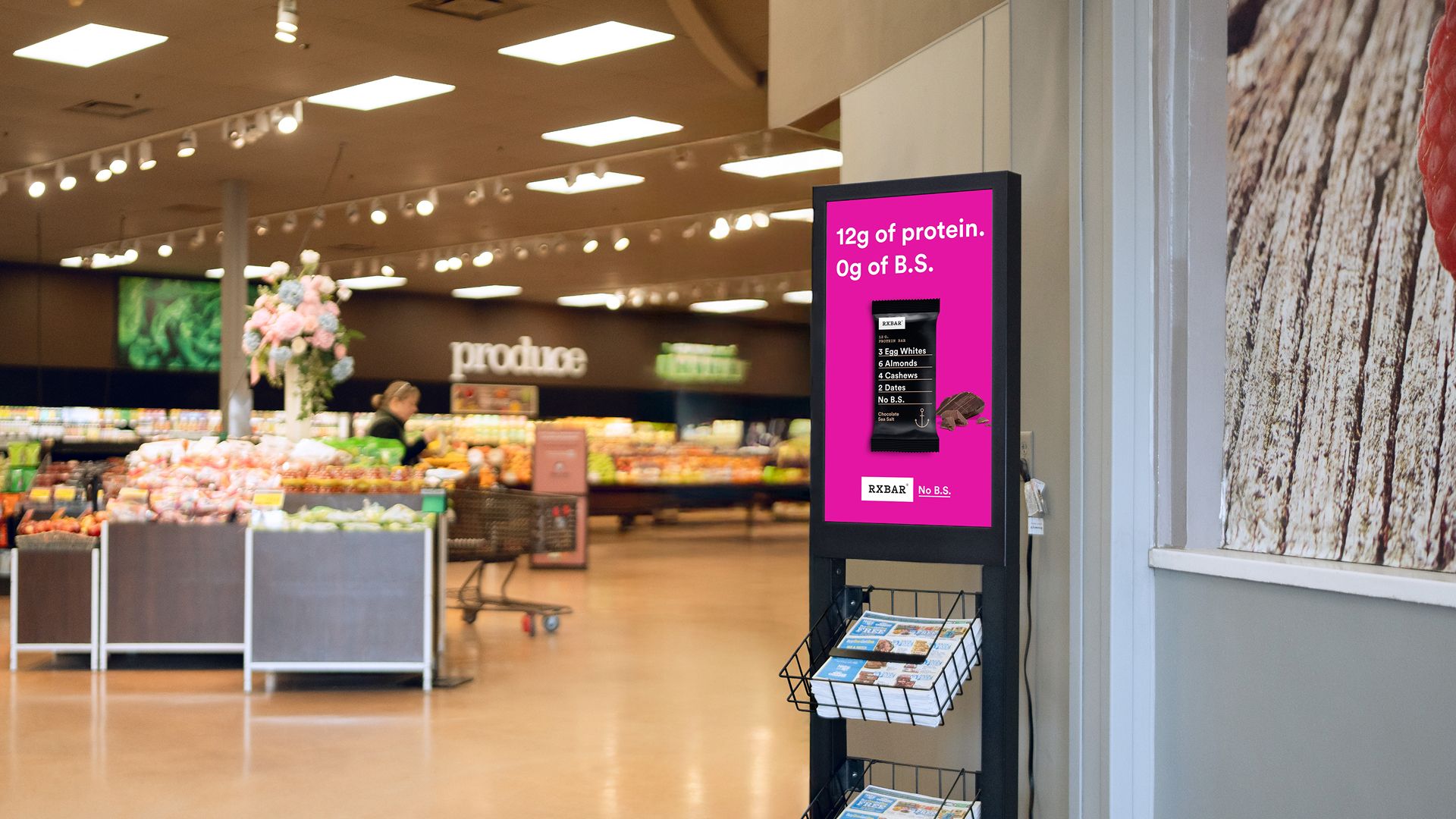
Hy-Vee isn't a small operation. With 338 stores and over 10,000 screens, the Midwest grocer has built one of the more mature in-store retail media programs in the country. Britt Polihronis has been at the center of that build, bringing an agency background from her time at Merkle and a clear point of view on what it takes to build an in-store program that performs for the retailer, brands, and shoppers alike.
We talked to Britt about the evolution of Hy-Vee's network, how brands are (and aren't) using in-store screens effectively, and why she thinks measurement is still the most important unsolved problem in the channel.
From side hustle to strategic capability
Hy-Vee's retail media journey started about seven years ago, like most networks, as one piece of a broader omnichannel program. Three years ago, the company made a deliberate decision to treat it as a major investment, not an ancillary one.
Britt joined two years ago, as the network was moving from launch into growth mode. She describes her first year as stabilization: building the right foundation, understanding what suppliers actually needed, and making sure brands had reason to keep investing. The second year shifted to measurement, tying every campaign back to sales outcomes.
The differentiator Britt points to most is Hy-Vee's relationship with merchandising. "We always start with the cost of goods," she says. "Then we have strong merchandising support, and we amplify everything through retail media, including screens, onsite, and offsite. If all of those are working together, success is inevitable."
For Britt, in-store screens aren't a standalone channel; they're the final layer of a campaign that's already in motion.
What brands are getting wrong
Brands are generally willing to test in-store, but Britt thinks most are still treating screens like any other awareness channel, running banner-style creative without thinking about the point-of-purchase context.
"In-store messaging needs to align with everything the shopper has already seen, but it also needs to do something specific," she said. "It's not just a rinse and repeat of a banner ad on a screen. It really needs to focus on a clear, cohesive message."
Her other consistent observation: brands get stuck on zone placement. CPG brands often want to restrict campaigns to the aisle where their product lives, missing the opportunity to drive shoppers toward that aisle from other parts of the store. Britt pushes for testing in produce, front-end, dwell zones like pharmacy and checkout, and anywhere a shopper is already paused.
The health market section has been especially effective for Hy-Vee. "There's a little education needed for shoppers to make that final purchase decision," she said. "Being right there at the point of purchase, with the product on screen in a big way, seals it."
The measurement gap
Britt is direct about the hardest thing in in-store retail media right now: proving it worked.
Hy-Vee has strong results to point to. A chip brand campaign across 130 stores drove a 15% in-store sales lift and nearly an $8 ROAS. But Britt is more interested in the cases where measurement is harder, particularly newer categories, emerging brands, and health and wellness products where purchase behavior is less predictable.
"Someone's going to have to take the leap with us in those categories," she says. "We'll be there with them."
Longer term, she sees measurement, personalization, and deeper integration as the three areas that will define where in-store media goes. On personalization specifically, Britt is clear-eyed about what that means in a physical store context: not one-to-one targeting, but regional and contextual relevance. Weather-triggered messaging, local cultural moments, store-level audience context.
"I would not want a screen to say 'Hey Brittany, we noticed you have chips in your cart,'" she said. "But if it's telling me the pollen count is high and I should pick up eye drops, that's a different thing entirely."
On working with a partner vs. building internally
Some retailers are managing their in-store screens themselves. Britt's view on that choice is practical: Hy-Vee needed to move fast, and building the technology internally would have slowed everything down.
"We needed a partner that could build with us, with an interface that let all sides operate within the same environment," she said. Working with Grocery TV meant Hy-Vee could run its own media alongside RedMedia campaigns, while also accessing national and localized brand dollars that wouldn't have come through a self-built system.
Her advice for retailers still figuring this out: treat in-store as a strategic capability, not just a technology investment, and recognize that internal strength and external expertise aren't competing choices.
The In-Store Playbook covers what brands need to know before their first campaign, from zone strategy to share of voice. Get the playbook.