
Shoppers are spending more carefully, and familiar brands are no longer guaranteed a spot in the cart.
In Grocery TV’s Q2 2026 CPG Pulse survey, 72% of shoppers said they’re more concerned about their grocery bill than they were six months ago. Sixty-five percent have switched from a name brand to a store brand in at least one category to save money.
Those individual swaps are adding up across the market. U.S. private-label CPG sales reached $330 billion in 2025, according to consumer research firm Circana, with store brands accounting for 24% of unit sales.
Grocery TV's research shows shoppers making the loyalty calculation one category, one purchase at a time, giving brands an opportunity to compete on every trip.
Loyalty breaks differently by category
Brand loyalty doesn't look the same across the grocery aisle. Shoppers are more willing to switch brands in some categories than others, depending on how they weigh price, familiarity, and the importance of the product to their household. A shopper who grabs their favorite brand-name snack in one aisle may reach for store-brand flour in the next.
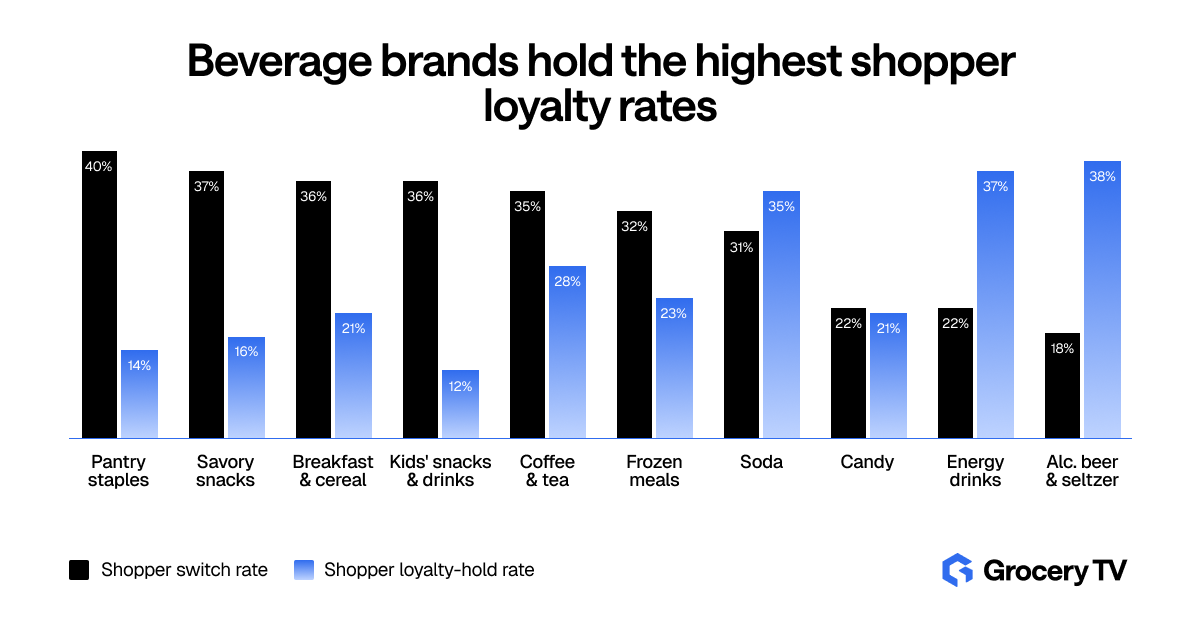
Trade-down runs highest on shelf-stable goods. Switch rates average 31% across packaged categories like pantry staples and snacks, compared with 21% for fresh produce and meat and seafood. Pantry staples top the list in our survey, with 40% of shoppers willing to swap a name brand for a more affordable option.
Kids' snacks and drinks hold the lowest loyalty, with just 12% sticking with their usual brand, a sign parents are especially willing to trade down here. At the other end of the loyalty spectrum is alcohol, where only 18% have switched to private label and 38% say they never would.
Economic pressure is changing where people shop, too. Shoppers are increasingly willing to visit multiple stores to stretch their budgets: 58% shop across retailers for better prices, while just 2% stay loyal to a single store.
A shopper may have a preferred brand, but that preference isn't a guarantee of purchase. As budgets tighten, which brand wins can change from one category, retailer, or shopping trip to the next.
The category may be decided, but the brand often isn’t
Most shoppers walk into the grocery store with an idea of what they need. Our survey found that nearly 67% of shoppers decide which product categories they need before the trip but haven't decided which brands to buy. Another 11% make the brand decision entirely in-store.
A shopper might arrive knowing pasta is on the list, for example, then stand in the aisle deciding whether the familiar name brand is worth the extra dollar this week. A promotion, a lower-priced alternative, or a product they haven't tried before can all change what goes into the cart.
For brands, that makes the store an important part of the consideration journey. Digital, social, and CTV can build awareness and consideration before the trip, while in-store media gives brands another opportunity to influence the decision when shoppers are comparing their options.
In-store media can also extend the reach of those campaigns. Grocery TV’s Incremental Reach study found that adding in-store media to another media channel increased campaign reach by 49% on average. For an established national candy brand, that added reach translated into an 11.7x incremental return on ad spend. The brand also saw a 2% increase in household penetration above the benchmark when it used in-store media to promote its holiday candy shapes.
Brand switching creates room for trial
Loyalty and trial are two sides of the same moment. Every shopper reconsidering a familiar purchase is also an opportunity for another brand to win it, and many shoppers are already willing to experiment.
In our CPG survey, more than 84% said they’d recently tried a new food or beverage brand, most often because it was on sale or because they spotted it while browsing the shelf. Visibility in the store can reinforce a familiar choice or create an opening for trial.
What happens after the purchase matters, too. Grocery TV partnered with IAB to understand how marketers measure in-store media. Among marketers fully leveraging the channel, 75% measure loyalty or repeat purchase, compared with only 42% of those who say they're underutilizing it. Measuring repeat purchase is how a brand knows whether that shelf moment turned a one-time trial into a lasting choice.
Every shopping trip puts brand choice back in play. Reaching shoppers at the shelf gives you another chance to keep your brand in the cart or earn a place in it.
Learn how to make in-store part of your media strategy in The In-Store Retail Media Playbook for Brands.