For retailers considering in-store media, one concern often comes before the first screen is ever installed: How will it impact the shopper experience?
Retailers spend years building a store environment that feels intuitive and prioritizes the shopper. Adding screens can raise questions about whether advertising will distract shoppers, compete with the products, or disrupt the experience they’ve worked to create.
Research suggests those outcomes aren’t inevitable. Nearly 80% of grocery shoppers are favorable toward in-store retail media, and they perceive it as 3x less disruptive than other advertising channels.
The difference comes down in part to how the media fits into the shopping trip. The right placement, content, and execution can make in-store media feel like part of the environment rather than an interruption.
In-store media enhances the shopping trip
A major retailer concern is that shoppers simply don’t want to see digital advertising in the store. But shopper feedback points to a more nuanced picture of what people value from in-store media.
For example, 36% of shoppers say in-store digital signage gives them ideas for recipes or new ways to use products, while 31% say it entertains them while they wait in line. In a separate study, shoppers also rated in-store media 1.5x more enjoyable and 1.7x more useful than advertising in other channels.
Acceptance also remains consistent across generations. Just eight percentage points separate the most and least receptive age groups, suggesting that positive responses to in-store media aren't limited to younger, more digitally accustomed shoppers.
Not every part of the store should be treated the same
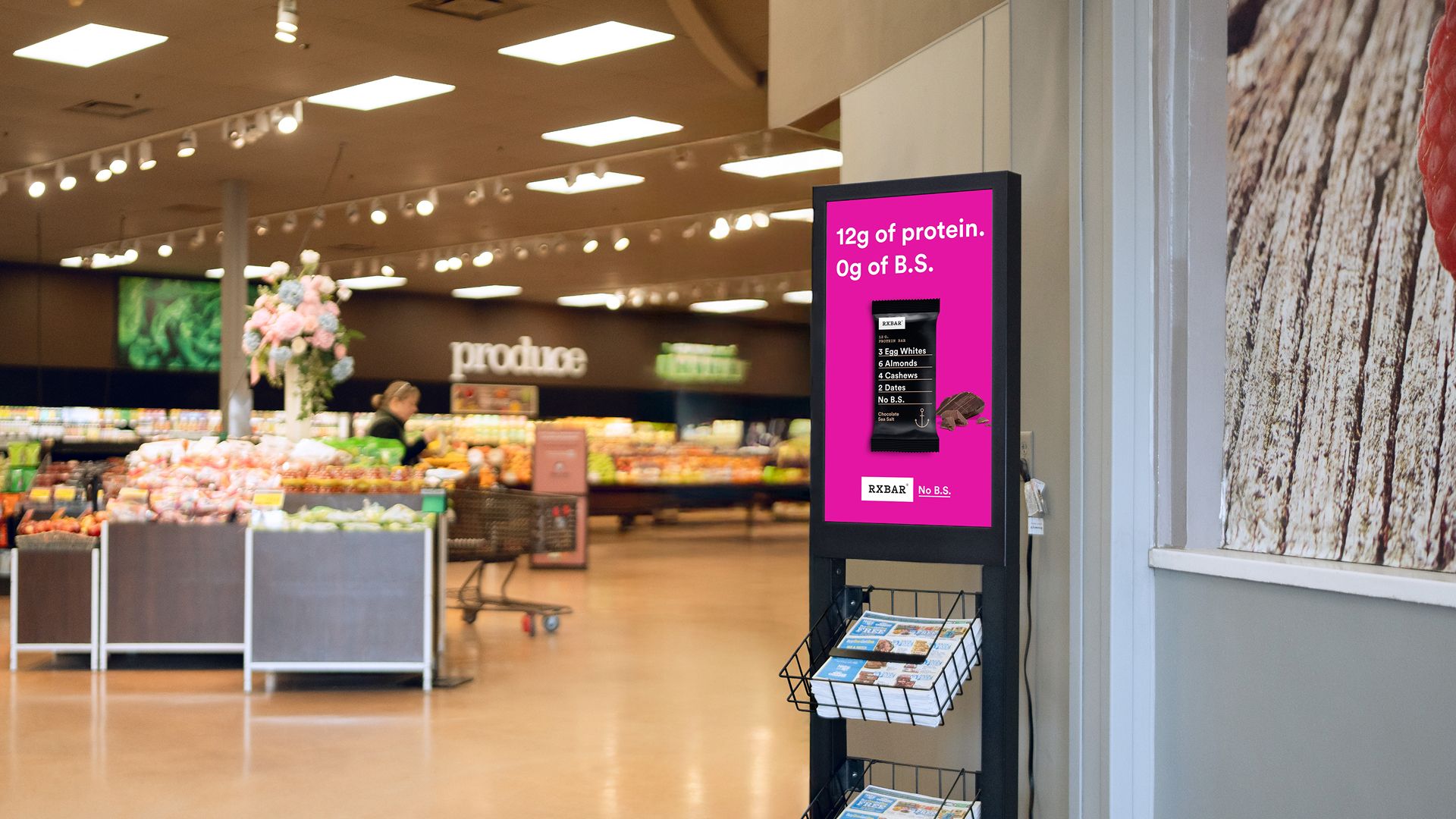
Shopper acceptance varies significantly by where screens appear in the store. Entrances are among the most receptive environments, with 88% of shoppers responding positively to screens there. Cooler doors sit at the other end of the spectrum: 41% of shoppers respond negatively, the highest rejection of any format tested.

The difference comes down to how the placement fits into the shopping trip. As Grocery TV CEO Marlow Nickell explains, cooler screens, shelf blades, and shelf talkers “all share the same problem: they come between the shopper and the product.” In the aisle, shoppers are often focused on finding something specific, so media that obscures a product or slows them down can create friction.
The 2026 In-Store Shopper Perception Report groups placements into three categories based on shopper acceptance: “No-Brainer,” “Handle with Care,” and “Extreme Caution.” That framework gives retailers a practical starting point for deciding where media can add value and where it needs more consideration.
Content should follow the same logic. Promotions and information about current sales can work across a range of placements, while higher dwell-time areas such as checkout can create opportunities for recipes, health tips, seasonal ideas, and other useful or entertaining content.
An in-store media strategy that fits the store you built
The same retail media setup won’t work in every store. Retailers have different layouts, shopper patterns, and brand identities, so the goal should be to build an in-store media environment that feels native to the store rather than applying the same approach everywhere.
You can start by testing a representative mix of store types and layouts. See how media fits into the shopping trip, gather feedback, and adjust placement, content, or execution before expanding. This gives you a way to learn what works without getting stuck in pilot purgatory.
Hy-Vee’s experience points to the value of treating in-store media as part of the broader retail media strategy. Britt Polihronis, Chief Operating Officer at Hy-Vee’s RedMedia, says the retailer approaches screens alongside merchandising, onsite, and offsite media rather than treating each as a standalone channel. That integration helps ensure the media supports what the retailer is already trying to accomplish in the store.
For retailers evaluating in-store media, the decision comes down to where it belongs, what role it should play, and how it fits the experience they've already built.
See more of what shoppers have to say about in-store media in the 2026 In-Store Shopper Perception Report.