The shopping trip is rarely a straight line. Parents compare prices, kids ask for their favorite products, promotions catch shoppers' attention, and new choices emerge along the way.
Even as rising grocery costs make shoppers more deliberate about every purchase, children continue to shape buying decisions in real time.
Back-to-school brings this dynamic into focus. While families may head to the grocery store with shopping lists full of lunchbox staples, breakfast foods, and after-school snacks, the brands that ultimately make it into the cart are often decided in the aisle.
For advertisers, that makes the grocery store one of the most influential places to reach families during back-to-school season.
The shopping trip shapes the cart
Parents are the primary decision-makers during back-to-school shopping, but they rarely make every purchase decision alone.
Our recent CPG pulse survey found that when children are part of the shopping trip, purchasing behavior changes in meaningful ways. Nearly half of parents spend more than they planned, 43% say yes to children's requests, and more than 86% report they have changed their shopping behavior in some way when kids are present.
Those behaviors are particularly relevant because they’re especially likely to play out in the categories that define back-to-school season: kids' snacks and drinks, breakfast foods, frozen prepared meals, soda, and candy.
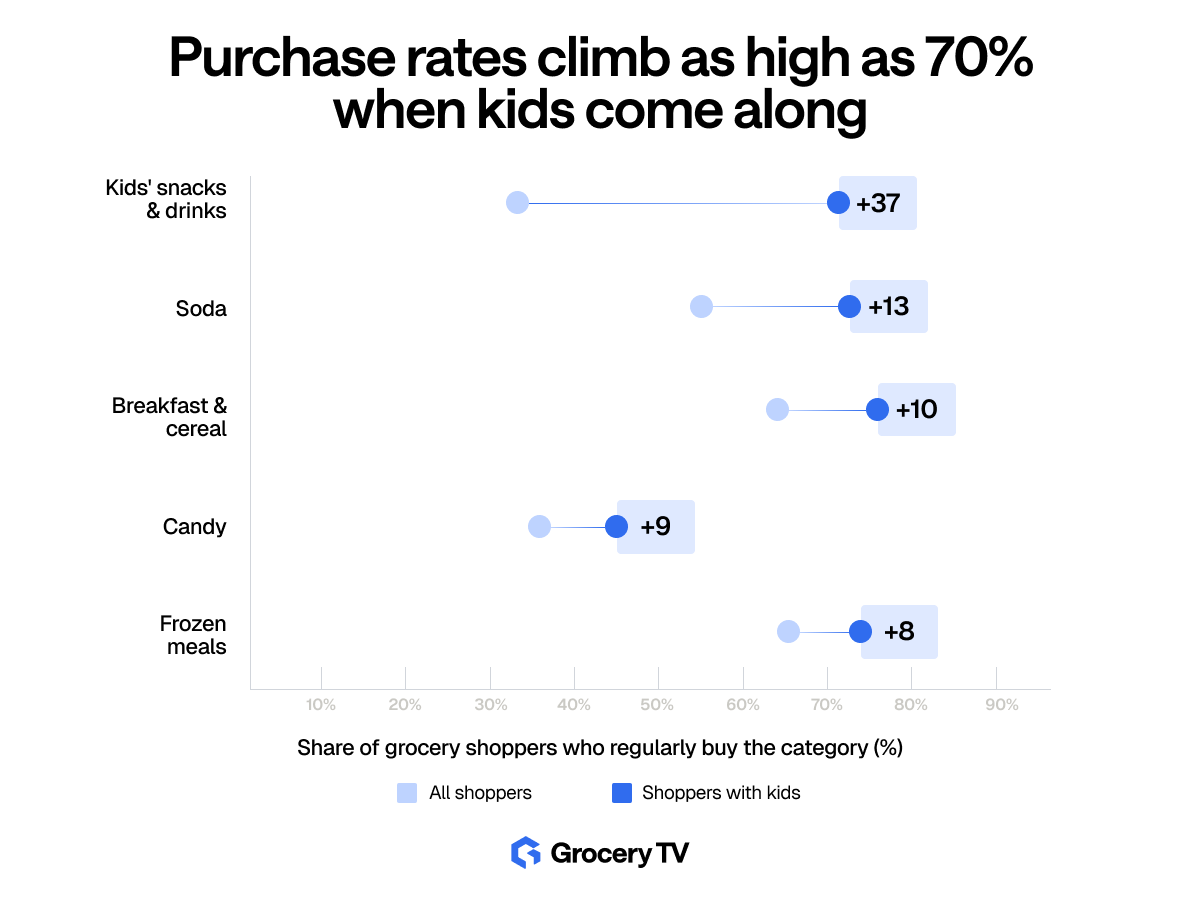
Nearly four in 10 shoppers buy kids' snacks and drinks regularly, and among shoppers with a child that climbs to seven in 10, close to double. The same category carries the lowest loyalty-hold of any we measured, at 12%, so the households reaching for it most are also the least committed to any one brand. High purchase and low loyalty stack on top of each other, and the decision gets made on the shelf, where a kid's request can settle it.
Most shoppers arrive in that same position. Nearly 67% decide which categories they need before walking in but haven't committed to specific brands. They're shopping for cereal, not necessarily your cereal, and looking for snacks without knowing yet which ones will make the cart.
The trial window is wide open
When shoppers are willing to reconsider familiar brands, they're also more likely to try something new. And much of that discovery happens right in the store.
More than half of shoppers say they’ll try something new simply because it’s in front of them, and the snack aisle is the top place shoppers discover new products.
That’s especially true in categories that kids influence. Kids’ snacks and drinks have the lowest loyalty-hold rate of any category at just 12%, giving brands a greater chance to stand out through in-store media.
For brands, that makes back-to-school one of the year's strongest opportunities to earn consideration, as long as they reach shoppers while those decisions are still unfolding. That 12% loyalty-hold is an opening, and in-store campaigns are built to capture demand that hasn't committed to a brand yet.
A leading kids' snack brand did exactly that, earning a 26x return on ad spend, an 8% sales lift for the advertised product, and a 4% lift for related products it never featured. The lift on unadvertised products shows how much of the category decision is still live at the shelf.
In-store deserves a larger role in back-to-school media planning
Back-to-school campaigns often focus on reaching parents through digital, social, and connected TV before they begin shopping.
While essential, those channels are only part of the story. We're seeing more advertisers recognize that the store itself is one of the last — and often most influential — places where brand decisions are made.
Natalie Cammerino, National Consumer Promotions Lead at Mars Snacking, put it this way: "Why would you not want to advertise at point of purchase when decisions are being made? Everyone who walks through that door is a potential buyer."
In-store media complements broader campaigns by reaching shoppers while they're actively comparing products, responding to promotions, and evaluating their options. One Grocery TV study found that adding in-store media to digital campaigns can deliver 49% incremental reach, helping brands connect with shoppers in moments other channels simply can't.
As shoppers become more selective, understanding what influences brand choice becomes even more important, and back-to-school media strategies should reflect how families actually make those decisions.
Parents may be steering the cart, but they're rarely the only ones filling it.
Explore the In-Store Retail Media Playbook for practical guidance on reaching shoppers at the moments that matter most.